




11月24日,文远知行发布2025年第三季度财报。公司营收1.71亿元,同比增长144.3%;Robotaxi业务营收3,530万元,同比增长761.0%;毛利润5,630万元,同比增长1,123.9%;毛利率32.9%,同比增长26.4个百分点,持续领跑行业;净亏损3.07亿元,同比减少70.5%;经调整后亏损2.76亿元。截至2025年10月31日,公司自动驾驶车队规模超1,600辆,其中Robotaxi数量近750台,展现全球规模化运营优势。
11月25日,文远知行创始人兼CEO韩旭就此接受全球顶尖财经电视新闻媒体CNBC专访,在采访中就公司业务表现、平台化战略与全球扩张计划进行了分享和讨论。
Mandy Drury, CNBC: Tony Han is the CEO of WeRide. He joins us now alongside our China reporter, Elaine Yu, who's also joining the conversation. Tony, great of you to join us today. Welcome to CNBC. I guess I'm going to ask the question that's on everybody's lips, and that is, when do you think you're going to be profitable?
韩旭是文远知行的CEO,今天他与我们的中国记者Elaine Yu一起加入我们的采访。韩旭博士,非常感谢您今天能来,欢迎来到CNBC。我想问一个大家最关心的问题,那就是你们什么时候会盈利?
Dr. Tony Han, WeRide: A very good question. First of all, I think the profitable phase is for sure coming. If we look at our Q3 numbers, there are several numbers I can share with you. Actually, we had one of the largest quarterly revenue increases. We increased 140% compared to last year, and compared to the last quarter, we also increased 34% with a very good profit margin of 32.9%. And you can see that our research expenditure is growing, but in terms of profit margin, in terms of revenue, and in terms of market, it's growing faster. So if you have two function curves, one growing but with a very flat slope, the other growing exponentially, you can be sure that these two curves will intersect in the future. But we still need to wait for more time to check our hypothesis. But I think the sure thing is this company will be profitable when you look at our numbers.
这是个非常好的问题。首先,我认为盈利是确定的。看第三季度的财务数据,我可以分享几个数字:我们的季度收入增幅是行业领先的,同比增长了140%,环比也增长了34%,而且毛利率非常可观,达到了32.9%。虽然我们的研发支出在增长,但在毛利率、营收和市场规模方面的增长速度更快。如果用两条函数曲线来比喻,一条增长平缓,另一条呈指数增长,它们未来一定会交汇。不过具体什么时候交汇,还需要时间去验证,但可以肯定的是,公司一定会盈利,从数据就能看出来。
And a few more numbers I want to share with you: last quarter, we had a revenue of 171 million RMB, and we acquired the first city-level driverless operation permit in Abu Dhabi. This is the first of its kind outside the U.S. And everybody now in Abu Dhabi, if you have an Uber app, you can hail a driverless robotaxi in Abu Dhabi, just like what you can do in San Francisco and Los Angeles. So this is kind of a historical moment. It is just like if you say, when do you think Waymo will be profitable? Like if you asked 10 years ago, when will Tesla be profitable? You know, I'm not very, very concerned about the exact timing, but I'm pretty sure of the result. I'm very optimistic with WeRide's leading position in the global market and technology. Profitability is a sure thing.
我想和大家分享几个具体数字:上一季度我们收入为1.71亿人民币,并且在阿布扎比获得了美国以外全球首个城市级无人驾驶运营许可。现在在阿布扎比,如果你有Uber App,就可以像在旧金山和洛杉矶一样,呼叫无人驾驶出租车,这是一个历史性的时刻。这就好比十年前问Waymo或Tesla什么时候盈利一样,我并不太关心确切时间,但我非常确信结果。文远知行作为全球市场和技术领先的企业,我对其盈利能力非常乐观。
Mandy Drury, CNBC: Indeed, so not just the license approval in Abu Dhabi that you're speaking of, Tony, you've also recently got approvals in places like Switzerland on top of Singapore and Saudi Arabia and Belgium and others. Now you're in eight countries around the world, or at least you've got licenses to operate there. Where is the next frontier? What country is next in your sights?
确实如此,不仅仅是阿布扎比的牌照,你们最近在瑞士、新加坡、沙特、比利时等地也获得了自动驾驶牌照。现在你们至少在全球八个国家拥有运营许可。接下来的拓展方向是什么?下一个目标国家会是哪里?
Dr. Tony Han, WeRide: Okay, so that's again a very good question. Thanks for the question. You know, before this interview, I tried to memorize these eight countries. It's getting harder and harder to memorize these eight countries, but the trick is: four in Asia, that is Saudi, UAE, Singapore, and China, and three in Europe, that is Belgium, France, and Switzerland, and then there's US. Which country will be the ninth, I'm not sure. We are trying to explore all possibilities. Japan is a possibility, and some countries like Norway and Spain are also possibilities. Malaysia as well. It all depends on having very strong local collaborators, the availability of strong local collaborators, and also regulatory support. So these are the factors. It's kind of hard to give exact numbers, but we are sure the promising markets are in Europe, Asia, East Asia, Middle East, and also MENA countries. Those are all potential countries for our ninth driverless permit.
这又是个非常好的问题,谢谢你的提问。其实在这次采访前,我还在努力记住这八个国家的名字,越往后越难全部记住。记住的诀窍是这样的,亚洲有四个——沙特、阿联酋、新加坡和中国,欧洲有三个——比利时、法国和瑞士,再加上美国。 至于第九个国家会是哪个,我也不能确定,我们正在探索所有可能性。日本是一个可能,挪威、西班牙这些国家也有潜力,马来西亚我们也在探索。 关键取决于当地是否有强有力的合作伙伴,以及监管层面是否支持,这些因素都会影响我们的选择,所以很难说具体是哪个,但我们确信欧洲、亚洲、东亚、中东以及更广泛的中东北非地区都是潜在市场,都可能成为我们第九张无人驾驶牌照的发放地。
Elaine Yu, CNBC: And Tony, great to see you again. So you mentioned a range of different countries, those in Europe, in the Middle East, China, potentially Japan. And we're looking at a lot of very different environments, climates here. And I'm also seeing a very quick expansion across all these countries. So how do you ensure safety and how do you scale this tech, when you look at so many different markets and so many different climates?
韩旭博士,很高兴再次见到您。您提到了一系列不同的国家,包括欧洲、中东、中国,可能还有日本,这些地方的环境和气候差别非常大,但我观察到你们扩张速度很快。那么,在如此多样的市场和气候条件下,你们如何确保安全并实现技术规模化落地?
Dr. Tony Han, WeRide: Again, thanks a lot for this fantastic question. About scalability, I think WeRide is the only autonomous driving company in the world taking both Tesla's approach and Waymo's approach.
再次感谢,这是个非常棒的问题。 在可扩展性方面,我认为文远知行是全球唯一一家同时采用“特斯拉路线”和“Waymo路线”的自动驾驶公司。
For Waymo's approach, we use Level-4 robotaxis with HD maps and with traditional machine learning frameworks, enhanced by recent large language models. We have already put this into real operation in Abu Dhabi, Beijing, and Guangzhou, and soon in Dubai and Riyadh. You can actually hail a driverless robotaxi through either the Uber or WeRide Go app. So for that part, we have already done things that are very similar to what Waymo has done.
在“Waymo路线”方面,我们采用的是L4级Robotaxi方案,依托高清地图和传统机器学习框架,并结合最新的大语言模型进行增强。目前,这套系统已经在阿布扎比、北京和广州投入纯无人运营,很快还会在迪拜和利雅得上线,用户可以通过Uber、Grab或文远知行推出的WeRideGo App呼叫纯无人Robotaxi,这与Waymo的运营模式非常类似。
And for Tesla's approach, WeRide just rolled out WePilot 3.0, which is comparable to FSD 14 of Tesla, and our ADAS system has already been installed in several of Chery's mass production passenger cars, like Chery Exeed ET and Chery Exeed ES, and soon it will be installed in Guangzhou Automobile Group's Aion car. So there is wide adoption of our ADAS system.
而在“特斯拉路线”上,文远知行刚刚发布了WePilot 3.0,与特斯拉FSD V14相当。我们的ADAS系统已经安装在奇瑞的多款量产乘用车上,比如奇瑞星纪元ET、星纪元ES,接下来也会在广汽埃安上使用,所以我们的ADAS系统正被广泛采用。
Leveraging on these two different approaches: the ADAS-based approach is navigation map-based, huge and intensive machine learning model-based. It has very good generality, but for reliability, I think the traditional robotaxi Level-4 approach is unparallelled. We managed to find a marriage of these two methods and leverage on two heterogeneous data from different sources. So, I think we can maintain generality while, at the same time, keep redundancy, and have a very good safety record based on our Waymo-like robotaxi operations. So far, we have been operating for 2,200 days, and our safety record is very, very good.
这两种方案各有优势:ADAS方案基于导航地图、超大规模机器学习,通用性强,而L4级Robotaxi的技术方案在可靠性和安全冗余方面则无人能及。文远知行设法将这两条路线结合起来,利用不同来源的两类异构数据,既保持通用性,又保证冗余和可靠性,依托多年Waymo式Robotaxi的运营建立了领先的安全纪录。到目前为止,我们已经安全运营超过2200天,安全表现非常出色。
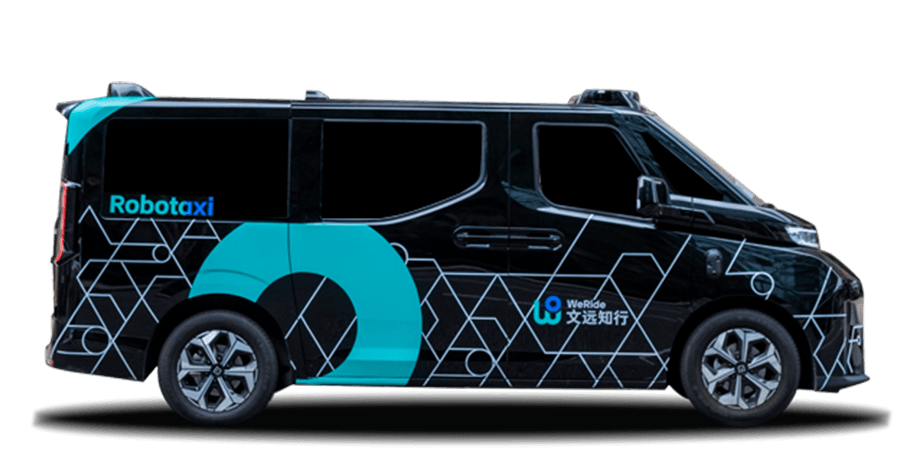
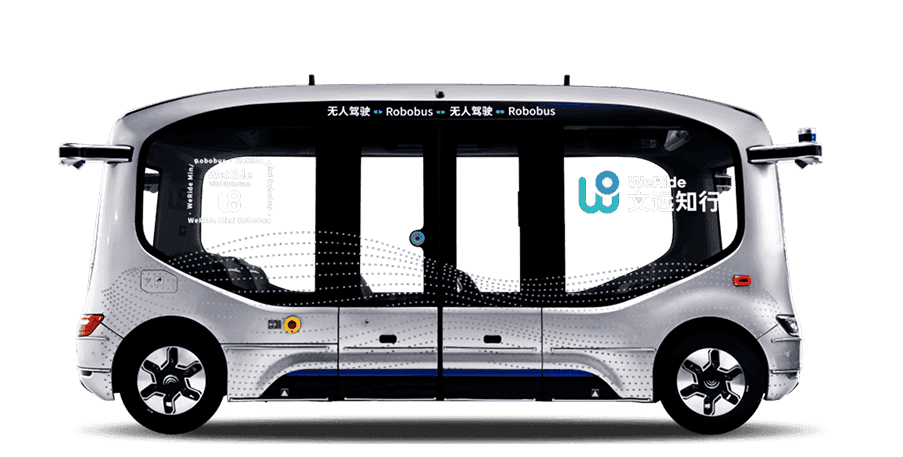
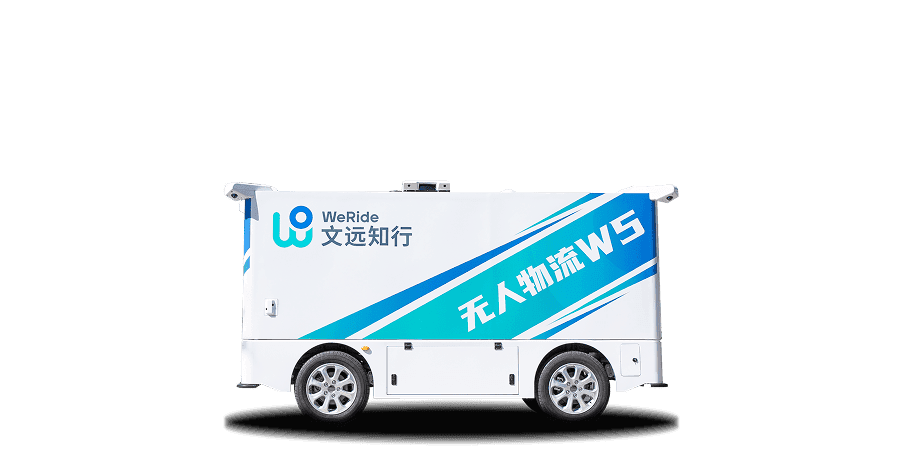
Elaine Yu, CNBC: And also, in terms of the vehicles that WeRide is involved in, there are robotaxis, robosweepers, robobuses. Why go into all these different vehicle types? What's the strategy behind that?
文远知行现在涉及的车型种类很多,包括自动驾驶出租车、自动驾驶环卫车、自动驾驶小巴等。为什么要布局这么多种类?背后的战略是什么?
Dr. Tony Han, WeRide: Yeah, the strategy is simply a platform strategy. It's like a Linux-based operating system that can support a PDA, pad, laptop, supercomputer, and smartphone. So, I think WeRide is building a very generic autonomous driving operating system which can support robotaxis, ADAS systems, robobus, and even robosweepers. If you think about this problem in principle, they are all vehicles running in urban scenarios. They have to auto-detect cyclists, jaywalkers, recognize signal lights, and try to very conservatively avoid other people violating traffic rules. All of these scenarios have to be solved, no matter the application. So we thought about it deeply and said okay, let's create a kind of machine learning-based platform that can solve all these scenarios all over the world, not only just in one country. And then once we've done this, we do it once, and it works for all applications. This way, we can reuse all algorithms and hardware design to the fullest extent. That is also one of our major competitive edges. In comparison with our competitors, I think we are unique in reusing algorithms. We have a very strong supply chain because all these products share the same hardware model, and all the designs are modularized. So this gives us a very good advantage.
简单来说就是平台化战略。 就像基于Linux的操作系统可以支持PDA、平板、笔记本、超级计算机、智能手机一样,文远知行希望打造一个通用的自动驾驶操作系统,可以同时适配自动驾驶出租车、ADAS系统、自动驾驶小巴,甚至自动驾驶环卫车。 本质上,它们都是在城市场景中运行的车辆,都必须能识别骑行者、乱穿马路的行人、交通信号灯,并且安全避让违规行为,所有这些场景都是共通的。 所以我们从底层重新思考这个问题,如果能用一个算法体系解决所有城市场景的问题,那它就能在所有国家服务所有类型的车辆,这样我们就能最大程度复用算法、硬件、供应链、模块化设计,这也是文远知行非常核心的竞争优势。相比同行,我认为我们在算法复用方面是独一无二的,我们拥有非常强大的供应链,所有产品共享相同的硬件模型,所有设计都是模块化的,这给了我们很大的优势。
Elaine Yu, CNBC: And looking at your latest quarterly numbers, the company is not profitable yet, but we've seen that loss narrowing and also revenues being driven by what the company has said are things like intelligent data services and autonomous driving related operations. Can you share a bit more color on what these intelligent data services or operations are that are driving revenue?
从最新季度财报来看,公司尚未盈利,但亏损在收窄,收入主要来自智能数据服务和自动驾驶相关运营。能详细介绍一下这些推动收入增长的智能数据服务和运营具体是什么吗?
Dr. Tony Han, WeRide: OK, so there are many robotaxi services, of course, with certain data annotation and also tool supply needs. We have our collaborators, and they sometimes need data annotation and all the tools, and we actually want to try to find all the opportunities for forming certain alliances. At the same time, if they like our relevant data services or tool services, we are very open to sharing with them. Of course, with certain commercial and profit margin. But the main thing is the robotaxi. I just want to emphasize our product revenue and robotaxi service-related revenue grew 428% and 66% year-to-year in the third quarter of 2025. Robotaxi revenue grew 7 times year-to-year. So all of these numbers show both product revenue and service revenue are very strong. I basically let product revenue and service revenue run freely. So, as long as we maintain our competitive edge, as long as we continue to extend our global market, you know, I don't want to add constraints. Whichever category can sell more with a certain profit margin, I would just say go freely.
我们提供多种与Robotaxi相关的服务,包括特定的数据标注和工具支持服务。一些合作伙伴会需要这些数据标注和工具服务,而我们也希望借此探索各种机会,建立更深的合作联盟。如果他们愿意使用我们的数据服务或工具服务,我们也非常开放,当然是在确保一定的商业条款和利润率前提下。 但我想强调的是:Robotaxi业务是最核心的增长动力。我们今年第三季度的产品收入同比增长了428%,Robotaxi相关服务收入同比增长66%,其中Robotaxi收入同比增长了7倍。 这些数字说明我们的产品收入和服务收入都非常强劲,我给它们的策略就是自由发展,保持竞争优势,继续拓展全球市场,不限制哪个业务单项增长得更多,只要能保持利润空间,我们就全力推进。
Elaine Yu, CNBC: Tony, you talk about the competitive edge, which of course is a nod to the fact that this is increasingly becoming a highly competitive sector. Do you see any M&A activity on the cards for your company in the next few years?
您谈到了竞争优势。事实是这个领域的竞争越来越激烈。未来几年,你们会有收并购计划吗?
Dr. Tony Han, WeRide: I think we are leaving this issue to be open. There are always very outstanding startups, and if they have their unique technology and we have enough cash reserved in our bank, I won't shut the door. And if there's a good startup, we can acquire them. Also, if we want to acquire a startup for the purpose of talent acquisition, I have never refrained from doing that, because talent does not grow on trees. Sometimes you meet them once in your life., and you better seize the chance to acquire them. In terms of forming a partnership, we are very strong. We formed partnerships with Uber, Grab, Bosch, Guangzhou Automobile Group, Chery, and many, many more strong partners. And in the future, if we want to form a certain form of JV, or form a JV for the global market, we are very open to doing so.
我们对此持开放态度,总会出现非常优秀的初创公司,如果他们有独特的技术,我们有足够的资金储备,我不会拒绝收购。如果有好的初创公司,我们就可以收购他们。同样,如果是为了获取人才而收购一家初创公司,我也不排斥,因为优秀人才不是从树上长出来的,有时候可能一生只会遇到他们一次,最好抓住机会。我们也非常擅长形成合作伙伴关系,与Uber、Grab、Bosch、广汽集团、奇瑞等许多强大的伙伴建立了合作关系。未来如果需要成立合资企业进入全球市场,我们也非常开放。
Mandy Drury, CNBC: So who do you see then as your biggest competitor right now, Tony? And in the same way that here in Australia, in the rideshare market, fierce competitors Uber and Didi, from a consumer standpoint, I toggle between the two of them depending on who's offering me the best price at the time. So what do you think that you would offer a consumer that would make them choose you over a competitor?
那你们目前最大的竞争对手是谁?就像在澳大利亚的网约车市场, Uber和Didi激烈竞争,作为消费者,我会根据谁当时的价格更有优势来选择。你们会给消费者什么理由选择文远知行?
Dr. Tony Han, WeRide: Okay, I think, as I mentioned in other occasions, our major competitor is really about who can provide better service to our customers at a reasonable cost. WeRide will never compete for lower prices. We want to compete for higher quality with an acceptable price range.
正如我在其他场合提到过的,主要竞争在于谁能以合理成本提供更好的服务。我们不会靠低价来竞争,而是希望在可接受的价格范围内提供更高的服务质量。
I just visited Sydney two months ago for a forum and I saw huge potential in the Australian market. And so to us, we've been considering three factors. Number one, how can we keep our advantage and leading position in technology? Number two, how can we keep on improving the quality of service to satisfy our customers? Number three, how can we build up strong alliances, partnerships, with local government, and with local partners? These are three major factors we are considering. If we can handle all of these three categories very well, we can keep our current leading position for sure. So in terms of competition, it has always been very intensive since 2017 when we founded this company. At that time, there were hundreds of startups, but most of them have already died off. WeRide is remaining in the leading position, and we are confident of keeping this position.
两个月前我去悉尼参加论坛,看到了澳大利亚市场的巨大潜力。对我们来说,我们关注三个因素:第一,如何保持技术领先;第二,如何持续提升服务质量;第三,如何与当地政府和合作伙伴建立强大的联盟关系。这是我们考虑的三大因素,如果这三点处理好,我们肯定能保持目前的领先地位。自2017年文远知行创立以来,市场竞争一直很激烈。当时有数百家初创公司,但大多数已经倒闭,文远知行仍然处于领先地位,我们有信心保持这个位置。
Mandy Drury, CNBC: Well, you're obviously exploring the Australian market, Tony. When are you coming here? As in, when are you likely to operate here?
很显然,你们正在探索澳大利亚市场,那什么时候会来这里?可能什么时候在这里运营?
Dr. Tony Han, WeRide: Actually, I received several invitations. Frankly speaking, I'm studying Australia's policy very carefully, and have several meetings scheduled with local governments. And in the Sydney and Melbourne areas, we've actually started, and I think Uber has been adopted quite widely here. Uber is a very good partner for us, so we will explore that for sure.
实际上,我收到了多个邀请。我们正在仔细研究澳大利亚政策,也安排了与当地政府的会议。在悉尼和墨尔本地区,我们已经开始探索。而且Uber在这里获得了广泛应用,同时Uber也是我们很好的合作伙伴,所以我们肯定会探索在这里的合作机会。
Also, Australia is a right-hand-drive country, and we have already designed our robotaxis for right-hand-drive countries, for example Japan, some regions in Hong Kong, and Singapore. In Singapore, we have already had this kind of robotaxi ready. So once the policy is available and when we find strong local partners, I think our technology and products are ready to be extended to the Australian market.
此外,澳大利亚是一个右舵驾驶国家,我们已经有针对右舵市场专门设计的Robotaxi,例如日本、香港、新加坡。在新加坡,我们早已准备好了这种类型的自动驾驶出租车。所以一旦政策允许,并且我们找到了强大的本地合作伙伴,我们的技术和产品就准备好进入澳大利亚市场了。
Mandy Drury, CNBC: We look forward to hearing more. Thank you so much for joining us today. It's been a pleasure, Tony Han of WeRide.
非常期待你们的进展,也非常感谢今天的分享。很高兴与您交流!